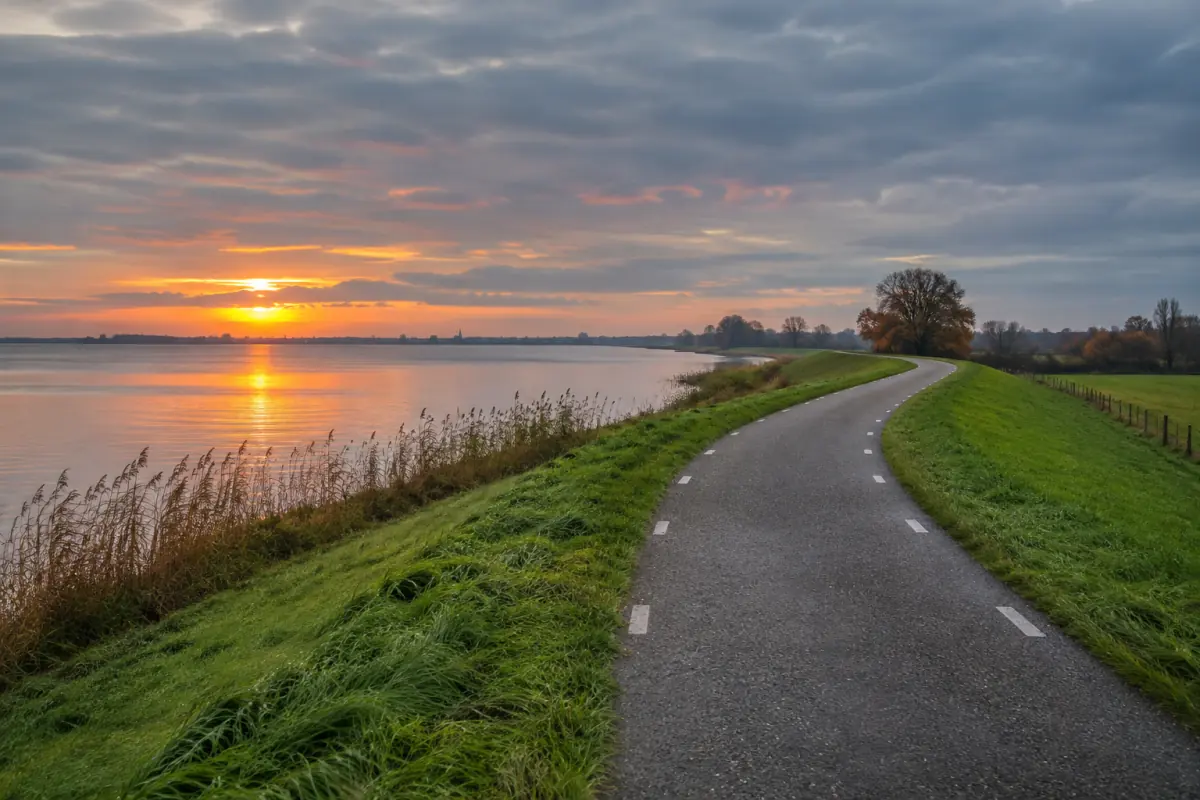
It was still October, but the light had already moved on. I called this the November ride before I had even reached the dike.
The road climbed gently out of the village and settled along the top of the bank. Water opened on one side; on the other, the fields were divided by straight dark ditches. The houses slipped behind me surprisingly quickly. Soon there was only the road, a low strip of grass and a sky with room to spare.
I had left later than intended. A small repair to a mudguard had become a long search for a dropped washer, followed by a cup of tea. By the time I reached the open stretch, the sun was already leaning towards the water. The bicycle threw a long, thin shadow that looked much more athletic than its owner.
Along the top
For several kilometres, the road was empty. A distant rider appeared, became a person in a green jacket, nodded and disappeared behind me. Then it was empty again. The surface was smooth enough to hear the tyres rather than feel them. Every bend seemed to offer another version of the same view, which was exactly what I had come for.
Below the bank, gulls lay across the grass in pale, untidy blankets. Every so often a whole patch lifted, turned once above the water and settled a little further along. I stopped beside a closed gate and took the thermos out of my bag. The tea was still hot. This felt like unusually good planning.
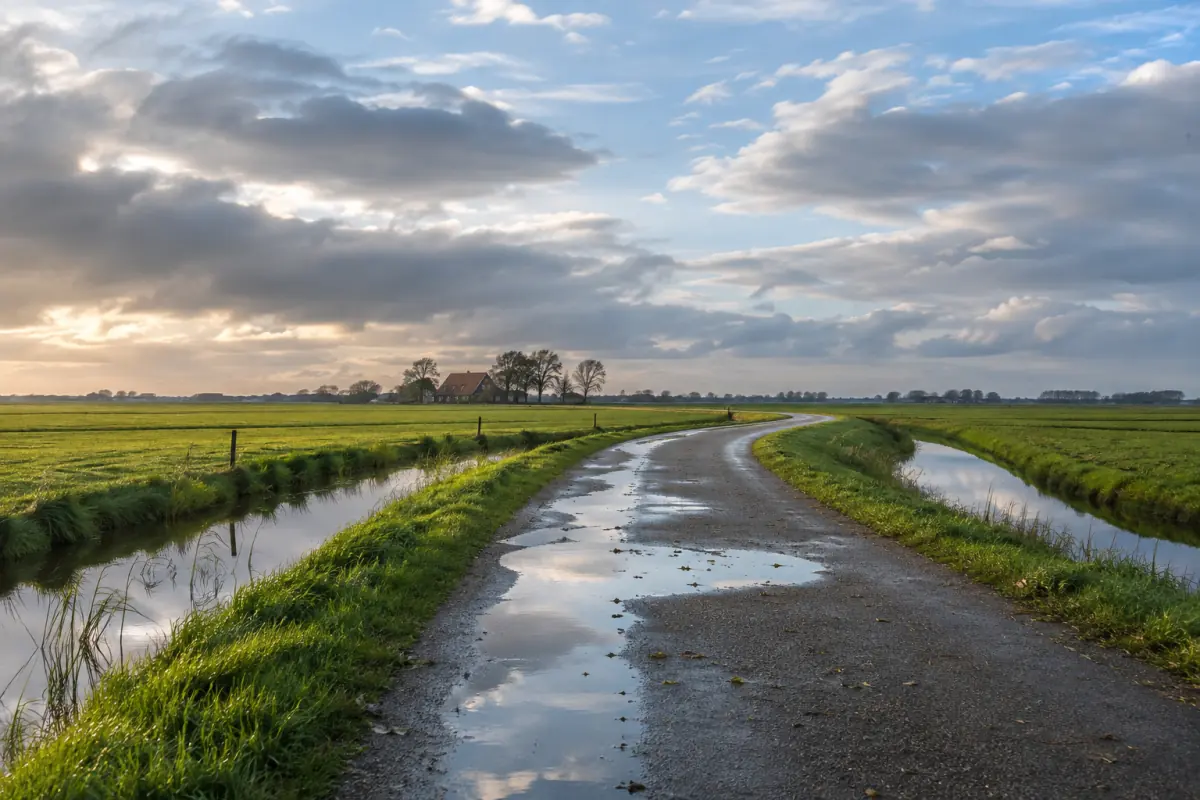
The last light
I stayed while a narrow band of orange worked its way under the clouds. The water caught it first, then the wet edges of the road. Everything inland had already turned blue-grey. A gull landed on a post near the gate and watched me drink, apparently disappointed by the lack of crumbs.
The return was the same stretch in a different light. I could still pick out the bright window of a farmhouse I had passed earlier. Near the village, I finished the tea and tucked the empty flask away. Thirty-six kilometres, roughly, and an evening that seemed much longer than the ride. The washer turned up in my shoe when I got home.